AI Detector Text Free

AI Detector Text Free — independent reviews, comparisons, pricing and step-by-step guides on Aizhi.

  • Aikuma

    Aikuma

    Aikuma is an Android app for collecting speech recordings with time-aligned translations. The app includes a text-free interface for consecutive interpretation, designed for users who are not literate. The Aikuma won Grand Prize in the Open Source Software World Challenge (2013). == Name == Aikuma means "meeting place" in Usarufa, a Papuan language where this software was first used in 2012. == History == Aikuma was developed with sponsorship from the National Science Foundation, including a $101,501 (US) project, "to use mobile telephones to collect larger amounts of data on undocumented endangered languages than would never be possible through usual fieldwork." Aikuma and its modified version (Lig-Aikuma) have been used for collecting substantial quantities of audio in remote indigenous villages. A modified version of the app, called Lig-Aikuma, has been developed at the Université Grenoble Alpes (LIG laboratory) and implements new features such as elicitation of speech from text, images and videos. == Similar Software == Lingua Libre is an online collaborative project and tool by the Wikimedia France association, which can be used as a tool for Language Preservation. Lingua Libre enables to record words, phrases, or sentences of any language, oral (audio recording) or signed (video recording). It is a highly efficient method to record endangered languages since up to 1000 words can be recorded per hour. All the content is under Free License, and speakers of minority languages are encouraged to record their own dialects.

    Read more →
  • Angel F

    Angel F

    Angel_F is a fictional child artificial intelligence that has been used in art performances worldwide focused on the issues of digital liberties, intellectual property and on the evolution of language and behaviour in information society. The character was created by Salvatore Iaconesi in 2007 as a hack to the Biodoll art performance by Italian artist Franca Formenti. The project was later joined by Oriana Persico who curated communication and part of the theoretical approaches of the action. The Angel_F project has been featured in books, magazines, national televisions, and has been invited to many conferences and events, both academic and artistic. == Creation == Angel_F is a backronym which stands for Autonomous Non Generative E-volitive Life_Form. The project was born in 2007 and resulted from the fusion of two contemporary art performances. Franca Formenti, an Italian artist living in Varese, invented the Biodoll character in 2002, which began making its appearances first on the network and later in the physical world by using what were called "clones": young women, prostitutes, pornographic starlets, transsexuals and models interpreting the role of a digital prostitute. The Biodoll was an art performance focused on research emerging from the network of new forms of sexualities, and on the analysis of changes brought on by this transformation to the concepts of private and public spaces, privacy, and the possibility of creating multiple fluid identities through language and digital media. The theme of fertility has always been central to the Biodoll performance: the digital prostitute was a wombless clone but desired giving birth to a son, the 'Bloki'. In a process starting in 2006, and ending in February 2007, Salvatore Iaconesi (xDxD.vs.xDxD) used his 'Talker' linguistic artificial intelligence to animate the digital child conceived with prof. Derrick de Kerckhove: Angel_F. Iaconesi and Persico met in November 2006 and immediately started collaborating on the birth of Angel_F. Angel_F was designed as a synthetic digital being composed through narrative, technological and cognitive psychology layers. The objective was to create iconic characteristics that resulted in being evocative and able to mimic human life up to a level in which bringing up a symbolic dialogue was possible. On the other side, the artificial identity was to implement and expose the cultural, emotional and relational ways that were typical of networked social ecosystems, among those technologies, systems and infrastructures that entered and shaped people's daily lives. The young digital being mimicked the evolution of a human baby: initially conceived inside the website of its digital mother it emulated the birth of a child by using the metaphor of a virus developing inside a website, taking progressively more space in the domain's databases and interfaces. Content was produced through the software by using small browser-based spyware techniques, through which Angel_F could infer the list of major portals that had been visited by the website's users. The Biodoll website was invaded by this growing presence and, thus, Angel_F was born. The Artificial Intelligence (AI) component of Angel_F was derived from another project, Talker, through which internet users could build up the AI's linguistic network by feeding it their text and web clips. Angel_F used this component to generate sentences and phrases, publishing them on the interface and on selected blogs. The parallel between the growth of the AI and that of a child kept building up and, just as children learn how to speak and act by observing their parents and the people around them, Angel_F used its spyware and AI components to learn, to navigate websites and web portals using web crawler based techniques, and to interact with other people by using the contents hosted and generated in its database to create surreal dialogues in blogs and websites. A virtual school was created, called Talker Mind, to narratively continue the AI's growth. Five professors (Massimo Canevacci, Antonio Caronia, Carlo Formenti, Derrick de Kerckhove and Luigi Pagliarini) fed their texts and academic articles to Angel_F, simulating virtual asynchronous lessons by using a multi-blog structure. A peer-to-peer system was also created at the time, named 'Presence'. Its interface resembled the one of 8-bit videogames and the peer to peer users travelled in a starry space and were able to perform standard Instant Messaging tasks, such as chat and file sharing. The interactions were possible both among humans and digital beings. Angel_F was the first user of the Presence peer to peer system. Angel_F entered the physical world as a baby-stroller mounted laptop computer that was used to let the digital child join events and conferences held worldwide. == Events == Angel_F performed all over the world, both in artistic contexts and in academic ones. It was also used for the communication strategy of several activist groups on the themes of intellectual property and digital freedoms. The first public space performance was held in Milan, when the Biodoll distributed a generative free press publication (called the Bloki FreePreXXX, its text was generated algorithmically and inserted into a prepared graphic layout). June 14, 2007: The second performance was held in Rome, at the Forte Prenestino, with a massive playroom created through computational graphics that people could interact with and that were generated by the AI. June 22, 2007: Angel_F presented the closing remarks for an Ipotesi per Assurdo (Absurd Hypothesis) with Salvatore Iaconesi and Oriana Persico at the IULM University in Milan, discussing the possibilities for an ecosystemic, sustainable reinvention of corporations. July 28, 2007: Hundreds of people at LiberaFesta (Free Party) in Rome listened to Angel_F in a speech discussing new politics and hacker ethics. 2007: The Glocal & Outsiders conference held in Prague at the Academy of Sciences was the first academic presentation of the Angel_F project, together with the Biodoll. September 2007: Angel_F was not allowed to post its contribution to the DFIR (Dialogue Forum for Internet Rights) held in Rome in preparation for Rio de Janeiro's Internet Governance Forum (IGF) edition. The case quickly turned into a collaboration among the involved parties and Angel_F was invited to the global event in Brazil where it was the only digital being present. Angel_F contributed a videomessage, in the digital freedoms workshop, which suggested some ideas for action to the United Nations and to all the parties involved in the IGF organization. October 2007: Angel_F was presented live at the FE/MALE 2 event, as an example of an atypical family during a public debate on new sexualities and social change. October 2007: Angel_F made a series of public performances Florence's Festival della Creatività (Festival of Creativity), an institutional event held periodically to showcase Italy's and other countries' best technological projects. During the festival Derrick de Kerckhove publicly recognized the little AI as his digital son. December 2007: Several international associations, and scientific researchers had been involved with Angel_F, eventually producing the system and process used to set up the Talker Mind digital school for the AI with Angel_F's professors. March 2008: The Tecnológico de Monterrey university in Mexico City organized the Computer Art Congress 2 international event, featuring Angel_F's project among with the ones by scientific researchers worldwide. July 2008: The project was presented in Austria at the Planetary Collegium's Consciousness Reframed 9 conference, together with the 'NeoRealismo Virtuale'. October 2008: Angel_F was used at a public event on a European scale called Freedom not Fear discussing privacy and civil liberties. July 2009: Angel_F has been seen with its digital father Derrick de Kerckhove to protest against Italy's harsh politics on freedom of speech. The project concluded in 2009 with the publication of a book entitled 'Angel F. Diario di una intelligenza artificiale' (Angel_F, the diaries of an Artificial Intelligence).

    Read more →
  • Ishikawa diagram

    Ishikawa diagram

    Ishikawa diagrams (also called fishbone diagrams, herringbone diagrams, cause-and-effect diagrams) are causal diagrams created by Kaoru Ishikawa that show the potential causes of a specific event. Common uses of the Ishikawa diagram are product design and quality defect prevention to identify potential factors causing an overall effect. Each cause or reason for imperfection is a source of variation. Causes are usually grouped into major categories to identify and classify these sources of variation. == Overview == The defect, or the problem to be solved, is shown as the fish's head, facing to the right, with the causes extending to the left as fishbones; the ribs branch off the backbone for major causes, with sub-branches for root-causes, to as many levels as required. Ishikawa diagrams were popularized in the 1960s by Kaoru Ishikawa, who pioneered quality management processes in the Kawasaki shipyards, and in the process became one of the founding fathers of modern management. The basic concept was first used in the 1920s, and is considered one of the seven basic tools of quality control. It is known as a fishbone diagram because of its shape, similar to the side view of a fish skeleton. Mazda Motors famously used an Ishikawa diagram in the development of the Miata (MX5) sports car. == Root causes == Root-cause analysis is intended to reveal key relationships among various variables, and the possible causes provide additional insight into process behavior. It shows high-level causes that lead to the problem encountered by providing a snapshot of the current situation. There can be confusion about the relationships between problems, causes, symptoms and effects. Smith highlights this and the common question “Is that a problem or a symptom?” which mistakenly presumes that problems and symptoms are mutually exclusive categories. A problem is a situation that bears improvement; a symptom is the effect of a cause: a situation can be both a problem and a symptom. At a practical level, a cause is whatever is responsible for, or explains, an effect - a factor "whose presence makes a critical difference to the occurrence of an outcome". The causes emerge by analysis, often through brainstorming sessions, and are grouped into categories on the main branches off the fishbone. To help structure the approach, the categories are often selected from one of the common models shown below, but may emerge as something unique to the application in a specific case. Each potential cause is traced back to find the root cause, often using the 5 Whys technique. Typical categories include: === The 5 Ms (used in manufacturing) === Originating with lean manufacturing and the Toyota Production System, the 5 Ms is one of the most common frameworks for root-cause analysis: Manpower / Mindpower (physical or knowledge work, includes: kaizens, suggestions) Machine (equipment, technology) Material (includes raw material, consumables, and information) Method (process) Measurement / medium (inspection, environment) These have been expanded by some to include an additional three, and are referred to as the 8 Ms: Mission / mother nature (purpose, environment) Management / money power (leadership) Maintenance === The 8 Ps (used in product marketing) === This common model for identifying crucial attributes for planning in product marketing is often also used in root-cause analysis as categories for the Ishikawa diagram: Product (or service) Price Place Promotion People (personnel) Process Physical evidence (proof) Performance === The 4 or 5 Ss (used in service industries) === An alternative used for service industries, uses four categories of possible cause: Surroundings: Refers to the environment in which the process occurs. Suppliers: Refers to external parties that provide inputs—raw materials, components, or services. Systems: Refers to the procedures, processes, and technologies used to perform the work. Skill: Refers to the human factor, particularly the knowledge and abilities of employees. Safety: Refers to physical and psychological well-being in the workplace. == Use in specific industries == The Ishikawa diagram has been widely adopted across various industries as an effective tool for root cause analysis in quality, efficiency, and safety-related issues. Its versatility allows it to be applied in both manufacturing and service contexts. In the manufacturing industry, particularly in the automotive and electronics sectors, the diagram is frequently used in continuous improvement initiatives such as Six Sigma and Lean Manufacturing. Quality teams use it to identify causes related to materials, methods, machinery, manpower, environment, and measurement, facilitating informed decision-making to reduce defects and optimize processes. In the food industry, the Ishikawa diagram is applied to analyze issues related to food safety, temperature control, cross-contamination, and regulatory compliance. Its use enables companies to identify improvement opportunities in production, packaging, and distribution stages. In the pharmaceutical sector, it is a key tool in process validation, quality control, and compliance with Good Manufacturing Practices (GMP). It helps visualize factors affecting product quality from formulation to storage. It has also been successfully implemented in sectors such as aerospace, pulp and paper, construction, education, and healthcare, where it supports structured problem-solving and promotes continuous improvement and a culture of quality.

    Read more →
  • Jarosław Królewski

    Jarosław Królewski

    Jarosław Królewski ([jaˈrɔswaf kruˈlɛfskʲi]; born September 26, 1986) is a Polish entrepreneur, programmer, sociologist, investor, and philanthropist from Hańczowa, Poland. He is a researcher and lecturer at the AGH University of Krakow. He was selected as a Young Global Leader by the World Economic Forum in 2025. Królewski is a cofounder and chief executive of the software development company Synerise that develops its namesake business intelligence software based on artificial intelligence and big data. He is also the president and a majority stakeholder of the Polish soccer club Wisła Kraków. == Biography == === Scientific activities === Królewski graduated from the AGH University of Kraków and the University of Banking and Management in Kraków. He completed two fields of study: a master's degree in sociology, and an engineer's degree in computer science. He co-created innovative study programs, including social informatics and electronic business, recognized as the most innovative field of study in Poland in 2012 by the Ministry of Science and Higher Education, which led to the AGH receiving a PLN 1 million award for the development of the program. Królewski is a research and teaching employee at AGH, where since 2010 he has been conducting classes and lectures on the Internet, mobile technologies, and UX/UI. He has been preparing a PhD thesis. He is the brand ambassador of the Academy. He is also a mentor of the Polish Development Fund network. In 2019, on the occasion of the AGH University's 100th anniversary, Królewski was honored the title of "AGH Graduate Junior 2018." Królewski is the co-originator of the "Data Science in Business and Administration" doctoral studies organized by the Faculty of Computer Science and Electronic Economy of the Poznań University of Economics. He is a co-author of a textbook E-marketing. Contemporary trends. Starter package (2013), and an Book on algorithmic governance Algocracy. How and why artificial intelligence changes everything (with Krzysztof Rybiński, 2023). === Business career === Throughout the 2000s, Królewski was responsible for issues of usability and user experience at the advertising agency Eskadra in Kraków. In 2012, along with programmer Miłosz Baluś and graphic designer Krzysztof Kochmański, he founded the software house Humanoit Group. The company created a project management software using machine learning and artificial intelligence. In 2013, HG Intelligence was established to create a platform for analytics and automation of business processes called "Synerise" that combined big data with artificial intelligence mechanisms. Królewski became the president of the company's management board. In 2016, the company rebranded itself after its own platform. It is one of the fastest growing enterprises in Poland – in 2019 it was valued at USD 85 million (PLN 323.5 million), and its value is still growing, in 2022 it announced an investment of USD 23 million. Królewski is a supporter of releasing some software in open-source form, an example of which is the open library Cleora.ai. Królewski has been described "one of the most promising young Polish businessmen in the technology industry." According to Forbes, he is a "visionary computer scientist who in many respects resembles the young Bill Gates." Królewski considers himself a “technological determinist and optimist.” He never wants to be a millionaire or billionaire, he spends 80 percent of his private income on education, sports and charities. === Sports === In his youth (2002–2006) he was a football player of the (then 4th-league) club Glinik Gorlice, and represented it at the then-highest level of junior competitions in Poland. He played there with Rafał Wisłocki, later president of Wisła Kraków and vice-president of Bruk-Bet Termalica Nieciecza. In early 2019, Królewski was the initiator of a rescue operation that saved Wisła Kraków from bankruptcy, as well as the originator of the crowdfunding issue of shares of Wisła Kraków, pioneering in Polish sports, during restructuring and searching for a strategic investor. The offered shares constituted 5.1 percent. all the company's shares, which meant that the club was valued at PLN 74.4 million. 40,000 shares were put up for sale, each worth PLN 100. Within 24 hours, they were purchased by 9,124 investors through an equity crowdfunding platform Beesfund, earning the club PLN 4 million. In March 2019, Królewski became vice-chairman of Wisła's supervisory board, a position he held until 2021. In April 2020, he became Wisła's co-owner, along with the footballer Jakub Błaszczykowski, and Tomasz Jażdżyński, president of Gremi Media (publisher of the news outlets Rzeczpospolita and Parkiet). The three granted a bridging loan to the club of PLN 4 million, each supporting PLN 1.33 million. The funds were used to repay the club's debts to players. In November 2022, the supervisory board of Wisła Kraków appointed Królewski as the president of the club's management board. In December 2022, Królewski took over a majority stake in the club. In January 2024, based on match statistics, he used AI tools to select Wisła's new coach, Albert Rudé. === Social activities === Królewski is the creator and originator of the nationwide educational project "AI Schools & Academy", the first artificial intelligence teaching program in Polish kindergartens, primary and secondary schools in Polish history. Launched in 2018, the project was financed by Synerise business partners: Carrefour, CCC, Ernst & Young, IDC, Media Expert, Microsoft, Orange Foundation, Oriflame, Bank Pekao, Photon, PZU, and Żabka. Physicists, mathematicians, and computer scientists conduct special classes in 1,500 kindergartens, primary and secondary schools. Outstanding students and teachers are awarded scholarships. The project was appreciated by experts. In the years 2018–2020, Królewski was the main sponsor of Glinik Gorlice. He also supported the women's football team Staszkówka Jelna (of Staszkówka). After taking over the shares of Wisła Kraków in 2020, he launched socially conscience initiatives along with other shareholders, including a women's football team, the amp football section, and the blind football section. He has privately sponsored social charities. == Accolades and awards == In 2017, Królewski along with the Synerise co-founders Baluś and Kochmański was included in the “New Europe 100” list of eastern Europe's brightest and best citizens changing the region's societies, politics, or business environments, according to Res Publica, along with the International Visegrad Fund, Google and the Financial Times. Królewski was included on Ernst & Young's list of the 30 most promising technology entrepreneurs in the world. In 2018, he was honored with the Special Jury Award in the Polish edition of the Ernst & Young Entrepreneur of the Year Award competition, for combining scientific activities with entrepreneurship. The same year, Królewski won an award in the competition Digital Shapers, distinguishing outstanding tech personalities by the Digital Poland Foundation. He was also selected to Ernst & Young startup program EY Accelerating Entrepreneurs for businesses that focus on disruptive fields. In 2019, as part of the AI Awards competition, Królewski received the title of AI Person of the Year. == Private life == Królewski comes from a Lemko family from Hańczowa in the Low Beskids. He is married to Aleksandra Królewska.

    Read more →
  • AI data center

    AI data center

    An AI data center is a specialized data center facility designed for the computationally intensive tasks of training and running inference for artificial intelligence (AI) and machine learning models. Unlike general-purpose data centers, they are optimized for the parallel processing demands of AI workloads, typically using hardware such as AI accelerators (e.g., GPUs, TPUs) and high-speed interconnects. The global push to construct these specialized facilities accelerated dramatically during the AI boom of the 2020s. Memory manufacturers prioritized production of High Bandwidth Memory (HBM) essential for AI servers, which led to a global memory supply shortage amid a broader competition for advanced chips, power, and infrastructure. Major tech companies are estimated to spend $650 billion on AI data centers in 2026. == Architecture == Data centers for building and running large machine learning models contain specialized computer chips, GPUs, that use 2 to 4 times as much energy as their regular CPU counterparts (250-500 watts). AI data centers use 60 or more kilowatts per server rack, whereas more standard data centers typically use 5 to 10 kilowatts per rack. == Operators == As of August 2025, The Information tracked 18 planned or existing AI data centers in the United States, operated by Amazon Web Services, CoreWeave, Crusoe, Meta, Microsoft/OpenAI, Oracle, Tesla, and xAI. Other AI data center operators include Digital Realty and Alibaba. Data centers are also being built in China, India, Europe, Saudi Arabia, and Canada. The New Yorker described CoreWeave as the most prominent AI data center operator in the United States. Two types of data center providers for machine learning have been noted: hyperscalers and neoclouds. The Verge listed large technology companies such as Google, Meta, Microsoft, Oracle and Amazon as hyperscalers. The New York Times described neoclouds as "a new generation of data center providers". CoreWeave, Nebius, Nscale, and Lambda have been described as examples of neoclouds. In January 2025, OpenAI, in partnership with Oracle and Softbank, announced the Stargate project, which as of September 2025 is composed of six built or proposed AI data centers in the United States. In response to the Stargate project, Amazon launched in October 2025 an AI data center on 1,200 acres of farmland in Indiana. This data center, known as Project Rainier, is one of the largest AI data centers in the world, with Amazon spending $11 billion on the project. Rainier is specifically intended for training and running machine learning models from Anthropic. As of that time, this facility contains seven data centers (out of an estimated 30 planned) and will use 2.2 gigawatts of electricity (equivalent to 1 million households) and millions of gallons of water per year. Computer chips from Annapurna Labs and Anthropic, Trainium 2, were designed for use in such facilities. Amazon pumped millions of gallons of water out of the ground to construct the data center, and as of June 2025, Indiana state officials are investigating whether this dewatering process led to dry wells for local residents. In November 2025, Anthropic announced a plan in partnership with Fluidstack to develop artificial intelligence infrastructure in the United States, including data centers in New York and Texas, worth $50 billion. Other AI data center projects include the Colossus supercomputer from xAI, a Louisiana-based project from Meta, Hyperion, expected to use 5 GW of power, and a second Ohio-based Meta project, Prometheus, with a capacity of 1 GW. A 3,200-acre AI data center, capable of 4.4-4.5 GW of power and located on the decommissioned Homer City Generating Station, is under construction as of 2025, and will use seven 30-acre gas generating stations supplied by EQT. As of December 2025, CRH is working on over 100 data centers in the United States. In 2025, ExxonMobil and NextEra announced plans to build a data center powered by natural gas and using carbon capture technology, with 1.2 GW of power capacity. They previously purchased 2,500 acres of land in the Southeastern United States and plan to market the data center to an artificial intelligence company. The increased interest in AI data centers has led to several executives from companies in that space becoming billionaires, including CoreWeave, QTS, Nebius, Astera Labs, Groq, Fermi (which is connected to former United States Secretary of Energy Rick Perry), Snowflake and Cipher Mining. Several companies involved in cryptocurrency mining, such as Bitdeer, CoreWeave, Cipher Mining, TeraWulf, IREN, Core Scientific, and CleanSpark have also been involved with AI data centers. == Finances == Between January and August 2024, Microsoft, Meta, Google and Amazon collectively spent $125 billion on AI data centers. Citigroup forecasted that $2.8 trillion would be spent on AI data centers by 2030, while McKinsey and Company estimated that almost $7 trillion would be spent globally by that time. According to S&P Global, $61 billion has been spent on the data center market as a whole in 2025, while debt issuance for data centers was $182 billion during the same year. Large technology companies have offloaded the financial risks of building AI data centers by setting up special purpose vehicles or by contracting with neoclouds. For example, Meta's Hyperion was mostly funded by Blue Owl Capital, which did so using a bond offering from PIMCO. Those bonds were sold to a number of clients, including BlackRock. Meta did not borrow money itself and instead established a special purpose vehicle from which it would rent the data center. This deal was structured by Morgan Stanley for $30 billion, the largest known private capital transaction as of 2025. Neoclouds such as CoreWeave have gone into debt to buy computer chips from Nvidia for their data centers, and the chips themselves have been used for loan collateral. As of December 2025, CoreWeave took out three GPU-backed loans, collectively worth $12.4 billion, from private credit firms (Blackstone, Coatue, BlackRock, PIMCO) and from banks (Goldman Sachs, JPMorgan Chase, Wells Fargo). Thus, these companies provide an indirect connection between private credit and established banks. Data centers have also established asset-backed securities, and debt for data centers has its own derivative financial products. The real estate industry, including asset managers, public companies and private investors, has also invested in data centers. == Energy sourcing == == Environmental footprint == Average AI data centers have an electricity footprint equivalent to 100,000 households, and use billions of gallons of water for cooling their hardware. In 2025, the International Energy Agency estimated that the larger AI data centers currently under construction could consume as much electricity as 2 million households. A 2024 report from the United States Department of Energy stated that data centers overall used 17 billion gallons of water per year in the United States, primarily due to "rapid proliferation of AI servers", and that this usage was forecasted to grow to nearly 80 billion gallons by 2028. Researchers estimated that AI data centers in the United States would emit 24-44 million metric tons of carbon dioxide and use 731–1,125 million cubic meters of water per year between 2024 and 2030. Peaking power plants, which have been proposed as a power source for AI data centers, emit sulfur dioxide and have historically been located disproportionately near communities of color in the United States. Reciprocating internal combustion engines, proposed as another power source for a data center, emit PM 2.5, nitrogen oxides, and volatile organic compounds. == AI data centers in the United States == In the United States, both the Biden administration and second Trump administration supported the construction of AI data centers. In January 2025, then-president Joe Biden signed an executive order for federal government agencies to support AI data centers on federal sites built by private companies, study their effect on energy prices, and encourage their use of renewable energy. In April 2025, the United States Department of Energy suggested 16 possible sites, including Los Alamos National Laboratory, Sandia National Laboratories and Oak Ridge National Laboratory. In its July 2025 AI Action Plan, the second Trump administration supported increased production of AI data centers. Several US states have incentivized local data center construction. For example, in 2024, lawmakers in Michigan approved tax breaks for data center equipment and construction material. Some data center companies have also invested or promised to invest in the infrastructure of local communities. In December 2025, Democratic senators Elizabeth Warren, Chris Van Hollen, and Richard Blumenthal wrote to seven technology companies (Google, Microsoft, Amazon, Meta, CoreWeave, Digital Realty, and Equinix) that they w

    Read more →
  • OpenCog

    OpenCog

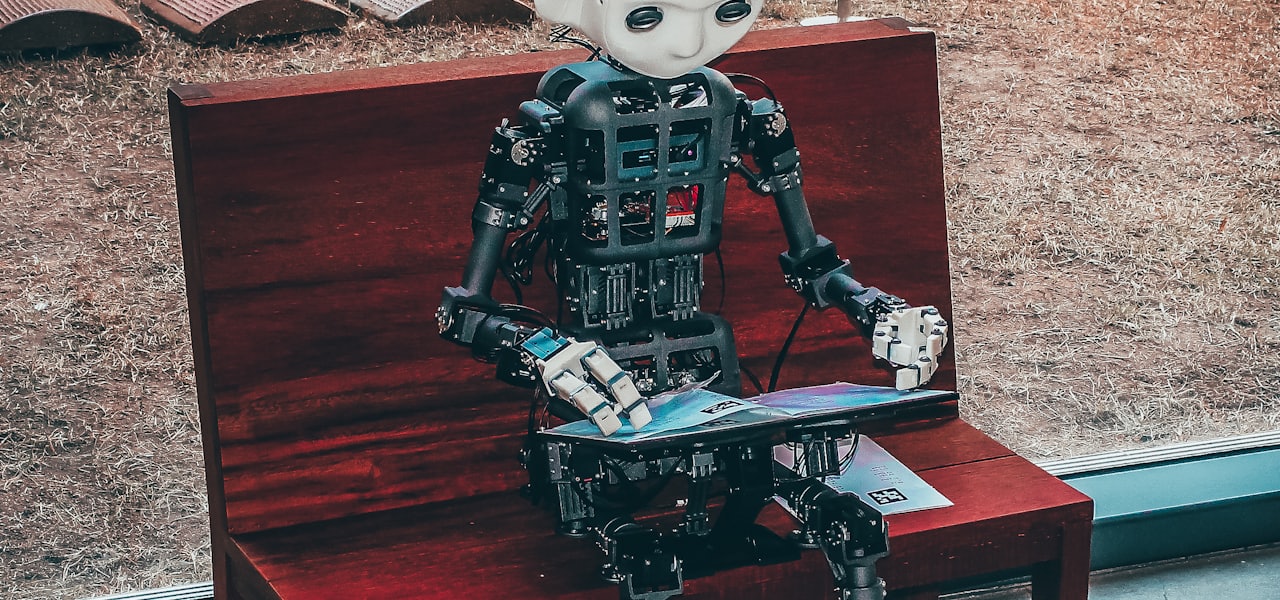
    OpenCog is a project that aims to build an open source artificial intelligence framework. OpenCog Prime is an architecture for robot and virtual embodied cognition that defines a set of interacting components designed to give rise to human-equivalent artificial general intelligence (AGI) as an emergent phenomenon of the whole system. OpenCog Prime's design is primarily the work of Ben Goertzel while the OpenCog framework is intended as a generic framework for broad-based AGI research. Research utilizing OpenCog has been published in journals and presented at conferences and workshops including the annual Conference on Artificial General Intelligence. OpenCog is released under the terms of the GNU Affero General Public License. OpenCog is in use by more than 50 companies, including Huawei and Cisco. == Origin == OpenCog was originally based on the release in 2008 of the source code of the proprietary "Novamente Cognition Engine" (NCE) of Novamente LLC. The original NCE code is discussed in the PLN book (ref below). Ongoing development of OpenCog is supported by Artificial General Intelligence Research Institute (AGIRI), the Google Summer of Code project, Hanson Robotics, SingularityNET and others. == Components == OpenCog consists of: A graph database, dubbed the AtomSpace, that holds "atoms" (that is, terms, atomic formulas, sentences and relationships) together with their "values" (valuations or interpretations, which can be thought of as per-atom key-value databases). An example of a value would be a truth value. Atoms are globally unique, immutable and are indexed (searchable); values are fleeting and changeable. A collection of pre-defined atoms, termed Atomese, used for generic knowledge representation, such as conceptual graphs and semantic networks, as well as to represent and store the rules (in the sense of term rewriting) needed to manipulate such graphs. A collection of pre-defined atoms that encode a type subsystem, including type constructors and function types. These are used to specify the types of variables, terms and expressions, and are used to specify the structure of generic graphs containing variables. A collection of pre-defined atoms that encode both functional and imperative programming styles. These include the lambda abstraction for binding free variables into bound variables, as well as for performing beta reduction. A collection of pre-defined atoms that encode a satisfiability modulo theories solver, built in as a part of a generic graph query engine, for performing graph and hypergraph pattern matching (isomorphic subgraph discovery). This generalizes the idea of a structured query language (SQL) to the domain of generic graphical queries; it is an extended form of a graph query language. A generic rule engine, including a forward chainer and a backward chainer, that is able to chain together rules. The rules are exactly the graph queries of the graph query subsystem, and so the rule engine vaguely resembles a query planner. It is designed so as to allow different kinds of inference engines and reasoning systems to be implemented, such as Bayesian inference or fuzzy logic, or practical tasks, such as constraint solvers or motion planners. An attention allocation subsystem based on economic theory, termed ECAN. This subsystem is used to control the combinatorial explosion of search possibilities that are met during inference and chaining. An implementation of a probabilistic reasoning engine based on probabilistic logic networks. The current implementation uses the rule engine to chain together specific rules of logical inference (such as modus ponens), together with some very specific mathematical formulas assigning a probability and a confidence to each deduction. This subsystem can be thought of as a certain kind of proof assistant that works with a modified form of Bayesian inference. A probabilistic genetic program evolver called Meta-Optimizing Semantic Evolutionary Search, or MOSES. This is used to discover collections of short Atomese programs that accomplish tasks; these can be thought of as performing a kind of decision tree learning, resulting in a kind of decision forest, or rather, a generalization thereof. A natural language input system consisting of Link Grammar, and partly inspired by both Meaning-Text Theory as well as Dick Hudson's Word Grammar, which encodes semantic and syntactic relations in Atomese. A natural language generation system. An implementation of Psi-Theory for handling emotional states, drives and urges, dubbed OpenPsi. Interfaces to Hanson Robotics robots, including emotion modelling via OpenPsi. This includes the Loving AI project, used to demonstrate meditation techniques. == Organization and funding == In 2008, the Machine Intelligence Research Institute (MIRI), formerly called Singularity Institute for Artificial Intelligence (SIAI), sponsored several researchers and engineers. Many contributions from the open source community have been made since OpenCog's involvement in the Google Summer of Code in 2008 and 2009. Currently MIRI no longer supports OpenCog. OpenCog has received funding and support from several sources, including the Hong Kong government, Hong Kong Polytechnic University, the Jeffrey Epstein VI Foundation and Hanson Robotics. In 2013, OpenCog began providing AI solutions to Hanson Robotics, and in 2017, OpenCog became a founding member of SingularityNET. == Applications == Similar to other cognitive architectures, the main purpose is to create virtual humans, which are three dimensional avatar characters. The goal is to mimic behaviors like emotions, gestures and learning. For example, the emotion module in the software was only programmed because humans have emotions. Artificial General Intelligence can be realized if it simulates intelligence of humans. The self-description of the OpenCog project provides additional possible applications which are going into the direction of natural language processing and the simulation of a dog.

    Read more →
  • Retrieval-based Voice Conversion

    Retrieval-based Voice Conversion

    Retrieval-based Voice Conversion (RVC) is an open source voice conversion AI algorithm that enables realistic speech-to-speech transformations, accurately preserving the intonation and audio characteristics of the original speaker. == Overview == In contrast to text-to-speech systems such as ElevenLabs, RVC differs by providing speech-to-speech outputs instead. It maintains the modulation, timbre and vocal attributes of the original speaker, making it suitable for applications where emotional tone is crucial. The algorithm enables both pre-processed and real-time voice conversion with low latency. This real-time capability marks a significant advancement over previous AI voice conversion technologies, such as So-vits SVC. Its speed and accuracy have led many to note that its generated voices sound near-indistinguishable from "real life", provided that sufficient computational specifications and resources (e.g., a powerful GPU and ample RAM) are available when running it locally and that a high-quality voice model is used. == Technical foundation == Retrieval-based Voice Conversion (RVC) utilizes a hybrid approach that integrates feature extraction with retrieval-based synthesis. Instead of directly mapping source speaker features to the target speaker using statistical models, RVC retrieves relevant segments from a target speech database, aiming to enhance the naturalness and speaker fidelity of the converted speech. At a high level, the RVC system typically comprises three main components: (1) a content feature extractor, such as a phonetic posteriorgram (PPG) encoder or self-supervised models like HuBERT; (2) a vector retrieval module that searches a target voice database for the most similar speech units; and (3) a vocoder or neural decoder that synthesizes waveform output from the retrieved representations. The retrieval-based paradigm aims to mitigate the oversmoothing effect commonly observed in fully neural sequence-to-sequence models, potentially leading to more expressive and natural-sounding speech. Furthermore, with the incorporation of high-dimensional embeddings and k-nearest-neighbor search algorithms, the model can perform efficient matching across large-scale databases without significant computational overhead. Recent RVC frameworks have incorporated adversarial learning strategies and GAN-based vocoders, such as HiFi-GAN, to enhance synthesis quality. These integrations have been shown to produce clearer harmonics and reduce reconstruction errors. == Research developments == Research on RVC has recently explored the use of self-supervised learning (SSL) encoders such as wav2vec 2.0 and HuBERT to replace hand-engineered features like MFCCs. These encoders improve content preservation, especially when source and target speakers have dissimilar speaking styles or accents. Moreover, modern RVC models leverage vector quantization methods to discretize the acoustic space, improving both synthesis accuracy and generalization across unseen speakers. For example, retrieval-augmented VQ models can condition the synthesis stage on quantized speech tokens, which enhances controllability and style transfer. Despite its strengths, RVC still faces limitations related to database coverage, especially in real-time or few-shot settings. Inadequate diversity in the target voice corpus may lead to suboptimal retrieval or unnatural prosody. These advances demonstrate the viability of RVC as a strong alternative to conventional deep learning VC systems, balancing both flexibility and efficiency in diverse voice synthesis applications. == Training process == The training pipeline for retrieval-based voice conversion typically includes a preprocessing step where the target speaker's dataset is segmented and normalized. A pitch extractor such as librosa or DDSP-DDC may be used to obtain fundamental frequency (F0) features. During training, the model learns to map content features from the source speaker to the acoustic representation of the target speaker while maintaining pitch and prosody. The training objective often combines reconstruction loss with feature consistency loss across intermediate layers, and may incorporate cycle consistency loss to preserve speaker identity. Fine-tuning on small datasets is feasible due to the use of pre-trained models, particularly for the SSL encoder and content extractor components. This approach allows transfer learning to be applied effectively, enabling the model to converge faster and generalize better to unseen inputs. Most open implementations support batch training, gradient accumulation, and mixed-precision acceleration (e.g., FP16), especially when utilizing NVIDIA CUDA-enabled GPUs. == Real-time deployment == RVC systems can be deployed in real-time scenarios through WebUI interfaces and streaming audio frameworks. Optimizations include converting the inference graph to ONNX or TensorRT formats, reducing latency. Audio buffers are typically processed in chunks of 0.2–0.5 seconds to ensure minimal delay and seamless conversion. Cross-platform compatibility with tools such as OBS Studio and Voicemeeter enables integration into live streaming, video production, or virtual avatar environments. == Applications and concerns == The technology enables voice changing and mimicry, allowing users to create accurate models of others using only a negligible amount of minutes of clear audio samples. These voice models can be saved as .pth (PyTorch) files. While this capability facilitates numerous creative applications, it has also raised concerns about potential misuse as deepfake software for identity theft and malicious impersonation through voice calls. == Ethical and legal considerations == As with other deep generative models, the rise of RVC technology has led to increasing debate about copyright, consent, and authorship. While some jurisdictions may allow parody or fair use in creative contexts, impersonating living individuals without permission may infringe upon privacy and likeness rights. As a result, some platforms have begun issuing takedown notices against AI-generated voice content that closely mimics celebrities or musicians. === In pop culture === RVC inference has been used to create realistic depictions of song covers, such as replacing original vocals with characters like Twilight Sparkle and Mordecai to have them sing duets of popular music like "Airplanes" and "Somebody That I Used to Know." These AI-generated covers, which can sound strikingly similar to the voice imitated, have gained popularity on platforms like YouTube as humorous memes.

    Read more →
  • Mycin

    Mycin

    MYCIN was an early backward chaining expert system that used black box to identify bacteria causing severe infections, such as bacteremia and meningitis, and to recommend antibiotics, with the dosage adjusted for patient's body weight — the name derived from the antibiotics themselves, as many antibiotics have the suffix "-mycin". The Mycin system was also used for the diagnosis of blood clotting diseases. MYCIN was developed over five or six years in the early 1970s at Stanford University. It was written in Lisp as the doctoral dissertation of Edward Shortliffe under the direction of Bruce G. Buchanan, Stanley N. Cohen and others. MYCIN emerged from the Stanford Heuristic Programming Project. MYCIN demonstrated the potential for expert systems in building high-performance medical reasoning programs. MYCIN is often viewed as a pioneer in the field of expert systems, even being referred to as the "grandaddy of them all-the one that launched the field" by Dr. Allen Newell. MYCIN led to the EMYCIN expert system shell ("essential MYCIN") for acquiring knowledge, reasoning with it, and explaining the results, without the specific medical knowledge. It can be described as "EMYCIN = Prolog + uncertainty + caching + questions + explanations + contexts - variables". An introduction is in Chapter 16 of Paradigms of Artificial Intelligence Programming (PAIP). == Method == MYCIN operated using a fairly simple inference engine and a knowledge base of ~600 rules by obtaining individual inferential facts identified by experts and encoding such facts as individual production rules. No other AI program at the time contained as much domain-specific knowledge clearly separated from its inference procedures as MYCIN. It would query the physician running the program via a long series of simple yes/no or textual questions. At the end, it provided a list of possible culprit bacteria ranked from high to low based on the probability of each diagnosis, its confidence in each diagnosis' probability, the reasoning behind each diagnosis (that is, MYCIN would also list the questions and rules which led it to rank a diagnosis a particular way), and its recommended course of drug treatment. MYCIN could additionally respond to queries by physicians related to why it asked the user a certain question, how it arrived at a conclusion, and why it did not consider certain factors. The developers performed studies showing that MYCIN's performance was minimally affected by perturbations in the uncertainty metrics associated with individual rules, suggesting that the power in the system was related more to its knowledge representation and reasoning scheme than to the details of its numerical uncertainty model. Some observers felt that it should have been possible to use classical Bayesian statistics. MYCIN's developers argued that this would require either unrealistic assumptions of probabilistic independence, or require the experts to provide estimates for an unfeasibly large number of conditional probabilities. Subsequent studies later showed that the certainty factor model could indeed be interpreted in a probabilistic sense, and highlighted problems with the implied assumptions of such a model. However the modular structure of the system would prove very successful, leading to the development of graphical models such as Bayesian networks. === Context === A context in MYCIN determines what types of objects can be reasoned about. They are similar to variables in Prolog, or environment variables in operating systems. === Evidence combination === In MYCIN it was possible that two or more rules might draw conclusions about a parameter with different weights of evidence. For example, one rule may conclude that the organism in question is E. Coli with a certainty of 0.8 whilst another concludes that it is E. Coli with a certainty of 0.5 or even −0.8. In the event the certainty is less than zero the evidence is actually against the hypothesis. In order to calculate the certainty factor MYCIN combined these weights using the formula below to yield a single certainty factor: C F ( x , y ) = { X + Y − X Y if X , Y > 0 X + Y + X Y if X , Y < 0 X + Y 1 − min ( | X | , | Y | ) otherwise {\displaystyle CF(x,y)={\begin{cases}X+Y-XY&{\text{if }}X,Y>0\\X+Y+XY&{\text{if }}X,Y<0\\{\frac {X+Y}{1-\min(|X|,|Y|)}}&{\text{otherwise}}\end{cases}}} Where X and Y are the certainty factors. This formula can be applied more than once if more than two rules draw conclusions about the same parameter. It is commutative, so it does not matter in which order the weights were combined. The combination formula was designed to have the following desirable properties: −1 can be interpreted as "false", +1 as "true", and 0 as "uncertain". Combining unknown with anything leaves it unchanged. Combining true with anything (except false) gives true. Similarly for false. Combining true and false is a division-by-zero error. Combining +x and -x gives unknown. Combining two positives (except true) gives a larger positive. Similarly for negatives. Combining a positive and a negative gives something in between. === Examples === The following examples come from Chapter 16 of PAIP, which contains an implementation in Common Lisp of a modified and simplified version of MYCIN for pedagogical purposes. A rule, and an English paraphrase generated by the system: == Results == An evaluation of MYCIN was conducted at the Stanford Medical School. The first phase of the evaluation consisted of 10 test cases of diverse origin, chosen by a physician who was not acquainted with MYCIN's methods or knowledge base. These cases were presented to 7 physicians and 1 senior medical student. 10 prescriptions were compiled for each of the cases, 1 recommended by MYCIN, 1 prescribed by the treating physician at the county hospital, and 8 by the aforementioned individuals. The second phase of the evaluation consisted of eight infectious disease specialists being provided the clinical summary and set of 10 prescriptions for each of the 10 cases and tasked to provide their own recommendations for each case and assess the 10 prescriptions. MYCIN received an acceptability rating of 65%, which was comparable to the 42.5% to 62.5% rating of five faculty members. This study is often cited as showing the potential for disagreement about therapeutic decisions, even among experts, when there is no "gold standard" for correct treatment. == Practical use == MYCIN was never actually used in practice. This wasn't because of any weakness in its performance. Some observers raised ethical and legal issues related to the use of computers in medicine, regarding the responsibility of the physicians in case the system gave wrong diagnosis. However, the greatest problem, and the reason that MYCIN was not used in routine practice, was the state of technologies for system integration, especially at the time it was developed. MYCIN was a stand-alone system that required a user to enter all relevant information about a patient by typing in responses to questions MYCIN posed. MYCIN ran on the DEC KI10 PDP-10, supporting a large time-shared system available over the early Internet (ARPANet), before personal computers were developed. MYCIN's greatest influence was accordingly its demonstration of the power of its representation and reasoning approach. Rule-based systems in many non-medical domains were developed in the years that followed MYCIN's introduction of the approach. In the 1980s, expert system "shells" were introduced (including one based on MYCIN, known as E-MYCIN (followed by Knowledge Engineering Environment - KEE)) and supported the development of expert systems in a wide variety of application areas. A difficulty that rose to prominence during the development of MYCIN and subsequent complex expert systems has been the extraction of the necessary knowledge for the inference engine to use from the human expert in the relevant fields into the rule base (the so-called "knowledge acquisition bottleneck").

    Read more →
  • Elastic cloud storage

    Elastic cloud storage

    An elastic cloud is a cloud computing offering that provides variable service levels based on changing needs. Elasticity is an attribute that can be applied to most cloud services. It states that the capacity and performance of any given cloud service can expand or contract according to a customer's requirements and that this can potentially be changed automatically as a consequence of some software-driven event or, at worst, can be reconfigured quickly by the customer's infrastructure management team. Elasticity has been described as one of the five main principles of cloud computing by Rosenburg and Mateos in The Cloud at Your Service - Manning 2011. == History == Cloud computing was first described by Gillet and Kapor in 1996; however, the first practical implementation was a consequence of a strategy to leverage Amazon's excess data center capacity. Amazon and other pioneers of the commercial use of this technology were primarily interested in providing a “public” cloud service, whereby they could offer customers the benefits of using the cloud, particularly the utility-based pricing model benefit. Other suppliers followed suit with a range of cloud-based models all offering elasticity as a core component, but these suppliers were only offering this service as an element of their public cloud service. Due to perceived weaknesses in security, or at least a lack of proven compliance, many organizations, particularly in the financial and public sectors, have been slow adopters of cloud technologies. These wary organizations can achieve some of the benefits of cloud computing by adopting private cloud technologies. An alternative form of the elastic cloud has been offered by vendors such as EMC and IBM, whereby the service is based around an enterprise's own infrastructure but still retains elements of elasticity and the potential to bill by consumption. == Description == Elasticity in cloud computing is the ability for the organization to adjust its storage requirements in terms of capacity and processing with respect to operational requirements. This has the following benefits: Operational Benefits - Services can be acquired quickly, meaning that the evolving requirements of the business can be addressed almost immediately, giving an organization a potential agility advantage. A properly implemented elastic system will provision/de-provision according to application demands, so if a particular business has activity spikes then the provision can be enabled to match the demand and the capacity can be re-allocated. Research and Development (R&D) Projects - R&D activities are no longer hindered by a requirement to secure a capex budget prior to a project starting. Capability can simply be provisioned from the cloud and released at the end of the exercise. Testing and Deployment - With most large-scale projects a size test needs to be performed prior to final rollout. By taking advantage of the elasticity of the cloud and creating a full-scale avatar of the proposed production system, realistic data and traffic volumes can be provisioned and released as needed. Expensive Resources Allocated - This will normally apply only in the context where a customer is applying at least some of their own servers as part of a cloud infrastructure, specifically where a business (for performance reasons) has decided to invest in solid-state storage as opposed to spinning platters. There are instances when, due to activity spikes, a less critical process may need to be moved from the high-performance resources to more traditional storage. Server Specification - When a customer has elected to own/lease hardware, they can select and specify servers that are specifically tuned to meet the likely needs of their operation (i.e., directly controlling the cost/benefit equation). Utility Based Payments - There is, of course, a key cost driver in this process, and the notion that you should pay for what you consume is acceptable for many organizations. When hardware capacity is sourced internally, organizations need to over-provision. This applies just as much to traditional outsourcing as it does to capex-related expenditure on in-house servers. Cloud Platform – At the heart of any cloud storage system is the ability to manage hyperscale object storage and a Hadoop Distributed Files System (HDFS). Elastic storage capability is particularly well suited to hyperscale and Hadoop environments, where its capability to rapidly respond to changing circumstances and priorities is essential

    Read more →
  • Artificial intelligence systems integration

    Artificial intelligence systems integration

    The core idea of artificial intelligence systems integration is making individual software components, such as speech synthesizers, interoperable with other components, such as common sense knowledgebases, in order to create larger, broader and more capable A.I. systems. The main methods that have been proposed for integration are message routing, or communication protocols that the software components use to communicate with each other, often through a middleware blackboard system. Most artificial intelligence systems involve some sort of integrated technologies, for example, the integration of speech synthesis technologies with that of speech recognition. However, in recent years, there has been an increasing discussion on the importance of systems integration as a field in its own right. Proponents of this approach are researchers such as Marvin Minsky, Aaron Sloman, Deb Roy, Kristinn R. Thórisson and Michael A. Arbib. A reason for the recent attention A.I. integration is attracting is that there have already been created a number of (relatively) simple A.I. systems for specific problem domains (such as computer vision, speech synthesis, etc.), and that integrating what's already available is a more logical approach to broader A.I. than building monolithic systems from scratch. == Integration focus == The focus on systems' integration, especially with regard to modular approaches, derive from the fact that most intelligences of significant scales are composed of a multitude of processes and/or utilize multi-modal input and output. For example, a humanoid-type of intelligence would preferably have to be able to talk using speech synthesis, hear using speech recognition, understand using a logical (or some other undefined) mechanism, and so forth. In order to produce artificially intelligent software of broader intelligence, integration of these modalities is necessary. == Challenges and solutions == Collaboration is an integral part of software development as evidenced by the size of software companies and the size of their software departments. Among the tools to ease software collaboration are various procedures and standards that developers can follow to ensure quality, reliability and that their software is compatible with software created by others (such as W3C standards for webpage development). However, collaboration in fields of A.I. has been lacking, for the most part not seen outside the respected schools, departments or research institutes (and sometimes not within them either). This presents practitioners of A.I. systems integration with a substantial problem and often causes A.I. researchers to have to 're-invent the wheel' each time they want a specific functionality to work with their software. Even more damaging is the "not invented here" syndrome, which manifests itself in a strong reluctance of A.I. researchers to build on the work of others. The outcome of this in A.I. is a large set of "solution islands": A.I. research has produced numerous isolated software components and mechanisms that deal with various parts of intelligence separately. To take some examples: Speech synthesis FreeTTS from CMU Speech recognition Sphinx from CMU Logical reasoning OpenCyc from Cycorp Open Mind Common Sense Net from MIT With the increased popularity of the free software movement, a lot of the software being created, including A.I. systems, is available for public exploit. The next natural step is to merge these individual software components into coherent, intelligent systems of a broader nature. As a multitude of components (that often serve the same purpose) have already been created by the community, the most accessible way of integration is giving each of these components an easy way to communicate with each other. By doing so, each component by itself becomes a module, which can then be tried in various settings and configurations of larger architectures. Some challenging and limitations of using A.I. software is the uncontrolled fatal errors. For example, serious and fatal errors have been discovered in very precise fields such as human oncology, as in an article published in the journal Oral Oncology Reports entitled "When AI goes wrong: Fatal errors in oncological research reviewing assistance". The article pointed out a grave error in artificial intelligence based on GBT in the field of biophysics. Many online communities for A.I. developers exist where tutorials, examples, and forums aim at helping both beginners and experts build intelligent systems. However, few communities have succeeded in making a certain standard, or a code of conduct popular to allow the large collection of miscellaneous systems to be integrated with ease. == Methodologies == === Constructionist design methodology === The constructionist design methodology (CDM, or 'Constructionist A.I.') is a formal methodology proposed in 2004, for use in the development of cognitive robotics, communicative humanoids and broad AI systems. The creation of such systems requires the integration of a large number of functionalities that must be carefully coordinated to achieve coherent system behavior. CDM is based on iterative design steps that lead to the creation of a network of named interacting modules, communicating via explicitly typed streams and discrete messages. The OpenAIR message protocol (see below) was inspired by the CDM and has frequently been used to aid in the development of intelligent systems using CDM. == Examples == ASIMO, Honda's humanoid robot, and QRIO, Sony's version of a humanoid robot. Cog, M.I.T. humanoid robot project under the direction of Rodney Brooks. AIBO, Sony's robot dog, integrates vision, hearing and motorskills. TOPIO, TOSY's humanoid robot can play ping-pong with human

    Read more →
  • Jensen Huang

    Jensen Huang

    Jen-Hsun "Jensen" Huang (Chinese: 黃仁勳; Wade–Giles: Huáng Jén-hsūn; Tâi-lô: N̂g Jîn-hun; born February 17, 1963) is a Taiwanese and American business executive and electrical engineer who is the founder, president, and CEO of Nvidia, the world's most valuable company. As of 2026, Forbes estimates his net worth at over US$200 billion, making him the seventh-wealthiest individual in the world. The son of Taiwanese immigrants, Huang spent his childhood in Taiwan and Thailand before moving to the United States, where he was a student in Kentucky and Oregon. After earning a master's degree from Stanford University, Huang launched Nvidia in 1993 from a Denny's restaurant in San Jose, California, at age 30 and has remained its president and CEO ever since. He led the company out of near-bankruptcy during the 1990s and oversaw its expansion into GPU production, high-performance computing, and artificial intelligence (AI). Under Huang, Nvidia experienced rapid growth during the AI boom, becoming the first company to reach a market capitalization of over $5 trillion in October 2025. In 2021 and 2024, Time magazine included Huang in their list of the most influential people. In 2025, he was named as one of the "Architects of AI" for Time's Person of the Year. == Early life and education == Huang was born in Taipei, Taiwan, on February 17, 1963, and moved to the southern city of Tainan as a child. He is the younger of two sons of Huang Hsing-tai, a chemical engineer at an oil refinery, and Lo Tsai-hsiu, a schoolteacher. They were a middle-class Taiwanese family that relocated often, and were native speakers of Taiwanese Hokkien. Each day, Jensen's mother randomly selected 10 words from the dictionary to teach her sons English. When he was five years old, Huang's family moved to Thailand to support his father's refinery career and remained there for approximately four years. He attended Ruamrudee International School while in Bangkok. In the late 1960s, Hsing-tai traveled from Taiwan to New York City to train under an air conditioning company and, after returning home, resolved to send his sons to the United States. At age nine, Jensen, despite not yet being able to speak English fluently, was sent by his parents to live in the United States. He and his older brother moved in 1973 to live with an uncle in Tacoma, Washington, escaping widespread social unrest in Thailand. Both Huang's aunt and uncle were recent immigrants to Washington state; they accidentally enrolled him and his brother in the Oneida Baptist Institute, a religious reform academy in Kentucky for troubled youth, mistakenly believing it to be a prestigious boarding school. In order to afford the academy's tuition, Jensen's parents sold nearly all their possessions. When he was 10 years old, Huang lived with his older brother in the Oneida boys' dormitory. Each student was expected to work every day, and his brother was assigned to perform manual labor on a nearby tobacco farm. Because he was too young to attend classes at the reform academy, Huang was educated at a separate public school—the Oneida Elementary school in Oneida, Kentucky—arriving as "an undersized Asian immigrant with long hair and heavily accented English" and was frequently bullied and beaten. In Oneida, Huang cleaned toilets every day, learned to play table-tennis, joined the swimming team, and appeared in Sports Illustrated at age 14. He taught his illiterate roommate, a "17-year-old covered in tattoos and knife scars," how to read in exchange for being taught how to bench press. In 2002, Huang said he remembered his life in Kentucky "more vividly than just about any other". Two years after Huang arrived in Oneida, his parents moved to the United States and settled in Beaverton, Oregon, after which the brothers withdrew from school in Kentucky to live back with them. As a teenager, Huang attended Aloha High School in Aloha, Oregon, where he excelled academically. He skipped two grades, graduated at age 16, and became a nationally ranked table-tennis player in addition to being a member of its mathematics, computer, and science clubs. In 1977, the school purchased an Apple II computer. Huang used the machine to play Super Star Trek, a text-based game, and to program in BASIC, creating his own version of Snake. Beginning at age 15, Huang got his first job working the graveyard shift at a local Denny's restaurant as a dishwasher, busboy, and waiter from 1978 to 1983. After high school, he chose to enroll at Oregon State University due to its low in-state tuition. He studied electrical engineering and graduated in 1984 with a bachelor's degree with highest honors. Huang later recalled, "I was the youngest kid in school, in class" and the only student who "looked like a child". Years later, while working as a microchip designer in Silicon Valley, he concurrently pursued graduate night classes at Stanford University, where he earned a master's degree in electrical engineering in 1992. == AMD and LSI Logic == After graduating from college, Huang was a microchip designer in Silicon Valley. He was recruited for positions at Texas Instruments, Advanced Micro Devices (AMD), and LSI Logic, ultimately choosing the California-based AMD due to already being familiar with the company. Huang designed AMD microprocessors while simultaneously attending Stanford and raising his two children. However, when he heard of new chip design processes at LSI Logic, Huang left AMD to assume a role as a technical officer at the LSI Corporation, working under a startup company, Sun Microsystems, where he met engineers Chris Malachowsky and Curtis Priem. LSI was in contract with Sun Microsystems and had introduced Huang to Malachowsky and Priem, who were working on a new graphics accelerator card. While the three produced the card's manufacturing process, the relationship between Malachowsky and Priem became strained as the two disputed the chip's design, leading to infighting; according to Malachowsky, they "broke every tool that LSI Logic had in their standard portfolio". In 1989, Huang, Malachowsky, and Priem finalized the accelerator, which they called the "GX graphics engine". GX was a widespread financial success; the sales of the graphics engine contributed to Sun Microsystem's revenue increasing from $262 million in 1987 to $656 million in 1990, and Huang was promoted to be the director of LSI's CoreWare, a division that manufactured chips for hardware vendors. == Nvidia == === Founding (1993) === When business began to slow for Sun Microsystems after 1990, Huang, along with Priem and Malachowsky, each resigned their jobs to pursue a venture together in making graphics chips for PC games. They initially named their new company "NVision" until Huang suggested that the company be named "Nvidia" based on the Latin word invidia, as Priem wanted competitors to turn "green with envy". They eventually dropped the "i" to honor the NV1 chip that they were then developing. The three met frequently in 1992 at a Denny's roadside diner in East San Jose to formulate a business plan. Huang chose for them to meet at Denny's due to his prior work experience at the restaurant chain and because it was "quieter than home and had cheap coffee". The three founded the company during one meeting at a breakfast booth at the diner. To formally incorporate the company, Huang found a lawyer, James Gaither of Cooley Godward, who demanded the $200 in cash in Huang's pockets to capitalize the company. After that meeting, Huang went back to Priem and Malachowsky to ask each of them for $200 for their respective shares of the company, which meant that Nvidia's initial capital was $600. On April 5, 1993, Huang personally signed Nvidia's original articles of incorporation into effect. Although he left LSI, Huang remained in good standing with the company and was able to secure funding for Nvidia from LSI's CEO, Wilfred Corrigan, who introduced Huang to venture capitalist Don Valentine. An account cited how Huang's presentation pitch went badly. Valentine, the leader of Sequoia Capital, chose to invest in Nvidia through Corrigan's support, as did Sutter Hill Ventures. The funding enabled Nvidia to begin development efforts toward its first chip and to begin paying wages for its employees. By the first day of operation, Huang was made Nvidia's president and CEO. Even though Huang, at age 30, was younger than Priem and Malachowsky, both Priem and Malachowsky believed that he was prepared to be CEO. According to Priem, "we basically deferred to Jensen on day one" and told Huang, "you're in charge of running the company—all the stuff Chris and I don't know how to do". === President and CEO (1993–present) === As of 2024, Huang has been Nvidia's chief executive for over three decades, a tenure described by The Wall Street Journal as "almost unheard of in fast-moving Silicon Valley". He owns 3.6% of Nvidia's stock, which went public in 1999. He earned US$24.6 million as CEO i

    Read more →
  • Rohit Chadda

    Rohit Chadda

    Rohit Chadda (born 26 August 1982) is an Indian investment banker and entrepreneur, who is the President & COO of Times Network. He leads the tech business portfolio and AI transformation of Times Group covering verticals like media tech, OTT, fintech, health tech, edu tech, ecommerce, gaming and sports. Previously, CEO of the digital business at Essel Group (Zee Entertainment, Zee Media and DNA), he was the co-founder of online food ordering platform Foodpanda. He is also the founder of omni-channel digital payments platform PayLo. He has been attributed for the turnaround of Zee Digital driving 4x growth in 2 years and bringing Zee's digital business to the second position on ComScore from ninth position making Zee the second largest digital media group in India. He has been featured among Top Tech CEOs of the decade (2010–2020) in India and was featured among Fortune 40 under 40 in 2015. == Education and early career == Chadda graduated from Delhi Technological University (formerly Delhi College of Engineering) with a degree in computer engineering and worked as a software engineer for Computer Sciences Corporation. In 2007 he joined Indian Institute of Management Calcutta to do his MBA after which he worked at Merrill Lynch as an investment banker in United Kingdom. He took an internal transfer to India in 2011. == Career == === Foodpanda === Chadda began his career in 2012 when he co-founded foodpanda. foodpanda expanded to around 40 countries before being bought by Delivery Hero. Before foodpanda got popular, he joked that he delivered pizza for a living. foodpanda had raised a total investment of over US$300 million till 2015. Chadda in the middle of 2015 stepped down from day-to-day responsibilities at Foodpanda to launch his digital payments startup. Foodpanda was acquired by its global competitor Delivery Hero in 2016. === Paylo === In 2015, he launched an omni-channel digital payments platform PayLo which acquired the in-restaurant payments app Ruplee in March 2016 for an undisclosed sum. PayLo was successful in the wake of demonetisation in India and expanded pan-India before being acquired by Immortal Technologies. Chadda believes that execution is more important than the idea to make a startup successful and the key challenge for experienced professionals to work in a startup environment is to unlearn what they have previously learned. PayLo acquired Ruplee before being itself acquired by Immortal Technologies. === Zee Group === Chadda took over as CEO of digital publishing of Zee Group in May 2019. Since 2017, he had led global product and strategy for Zee Group launching ZEE5, the flagship OTT of Zee Entertainment, across 170+ countries. Since June 2019, Zee Digital, the online arm of the Zee group, has registered the highest growth year-on-year among the top media publishers in India. Times Internet Limited, Network 18 Group, and India Today Group have grown by 45%, 21%, and 22% respectively from June 2020 over June 2019 while Zee Digital witnessed a growth of 123% over the same period. Zee Digital achieved its first milestone in September 2019 by crossing 100 million unique monthly visitors and was ranked 6th in the news and information category on ComScore India rankings at the time. Later in the month of March 2020 it crossed 150 million unique monthly visitors mark moving to 4th position. Further in May 2020 Zee Digital moved to 3rd position by crossing 185 million unique monthly visitors mark before finally ranking 2nd position in June 2020 in the ComScore rankings among all digital media groups in India. Chadda has led the transformation of the business of Zee Digital by scaling it to over 200 million users from 60 million users making it the second-largest digital media group in India. He attributes the growth from rank 9 to rank 2 in one year to the data and technology driven approach to content and the focus on vernacular languages. During his tenure, Zee Digital launched 8 new brand websites and 3 new languages to expand the product portfolio to 20 brands and 12 languages. During the US elections in November 2020, Zee Digital launched the English global news channel WION through a digital first approach across Asia Pacific, Middle East, UK and North America. Chadda launched Zee's UGC short video platform HiPi in the midst of the TikTok ban in India. Hipi was first launched within ZEE5 app ecosystem to capitalise on the reach of the OTT platform. After the success of the POC, he launched a standalone app for HiPi. HiPi is a short video platform that provides a complete video creation ecosystem along with news avenues of monetisation to content creators. He plans to use Zee's network reach of 600 million broadcast viewers and 300 million digital users to get creators on HiPi. HiPi launched India's first digital star hunt to allow users to audition for ZEE5 original shows through the short video platform. === Times Group === Chadda took over as President & COO of Times Network in September 2022. Leading the digital transformation of the group Chadda launched 11 new products in 18 months expanding the group's presence to various verticals in the tech business like fintech, health tech, edu tech, auto tech, OTT, ecommerce and gaming while extending the news vertical into business news, tech news and various vernacular languages. Within 4 months of his stint, in January 2023 he launched the digital platform for ET Now, targeting Gen Z, early jobbers and first time investors and laying the foundation for the fintech expansion for the brand. Since then, the product has expended to Hindi language targeting the larger Indian audience through the launch of ET Now Swadesh and further expanding to fintech business by launching ET Now Advisor, a distribution business focussing to upselling of cards, loans etc. to consumers by educating them and enabling them to make the right choices. ET Now reached 10 million users within the first 20 days of launch and became the No.1 business news channel on YouTube with 200 million views in April and May 2024. Expanding to health-tech, he launched AI powered daily health companion Health & Me in the presence of actor & fitness enthusiast Milind Soman. Chadda unveiled the auto-tech platform for Times Drive together with Union Minister of Road Transport and Highways, Nitin Gadkari showcasing the AI assisted platform that helps consumers make the right decisions when it comes to their automotive needs. In order to expand the group's presence into tech and gaming, Chadda acquired India's largest and most popular tech magazine Digit along with their digital platforms Digit.in and Skoar.gg in June 2024. Within a year, he was able to turnaround Digit's business with Digit.in becoming the No.1 Tech news platform in India in April 2025. Times Network launched college discovery platform unilist.in to enable students and parents search for the right course and institute for their higher education needs. With a focus on sports and gaming, Chadda launched India's first Inter-college esports championship under the brand of SKOAR College Gaming Championship. Times Network launched its OTT app Times Play under his leadership. The platform expanded its presence in the US through a partnership with Sling TV. He launched Pickleball Now which is the World's first TV channel focussed on the sport of Pickleball covering tournaments and leagues across the World. The channel has presence on TV and digital platforms and is being distributed to global markets through partnerships with BOTIM, Distro TV, Yupp TV and Rumble. In India, the channel is available on Jio TV, Jio TV+, Airtel Xtream Play, OTT Play, Dailyhunt. Times Group has launched India's Official Pickleball League affiliated with Indian Pickleball Association and Global Pickelball Federation which shall also be streamed live on Pickleball Now from 1st to 7th Dec 2025. === Investing and speaking === Chadda is a mentor at Esselerator, a Startup accelerator by Subhash Chandra Foundation. Esselerator is an initiative by Subhash Chandra, a billionaire Media baron, to promote and support tech entrepreneurs in domains like Media, Fintech and Education. Its powered by TiE Mumbai. Chadda is an angel investor in multiple technology startups like online school aggregator platform SchoolForSure.com. In 2019, he spoke at DPS to students on starting a business. At the time he remained CEO of Zee group's digital business division. == Philanthropy == Chadda organised a £1 mliion charity bike ride in aid of the British Asian Trust which saw participation by the Prince of Wales. Chadda presented the Prince of Wales with a cycling vest, which was said to be for his grandchildren. Chadda supports a non-profit organisation Mukkamaar founded by Bollywood actress Ishita Sharma that works towards fighting crime against women by teaching free self defence to young girls. He is helping the organisation launch their digital program through a WhatsApp-based chatbot. == A

    Read more →
  • Adobe Encore

    Adobe Encore

    Adobe Encore (previously Adobe Encore DVD) was a DVD authoring software tool produced by Adobe Systems and targeted at professional video producers. Video and audio resources could be used in their current format for development, allowing the user to transcode them to MPEG-2 video and Dolby Digital audio upon project completion. DVD menus could be created and edited in Adobe Photoshop using special layering techniques. Adobe Encore did not support writing to a Blu-ray Disc using AVCHD 2.0. Encore is bundled with Adobe Premiere Pro CS6. Adobe Encore CS6 was the last release. While Premiere Pro CC has moved to the Creative Cloud, Encore has now been discontinued. == Licensing == All forms of Adobe Encore used a proprietary licensing system from its developer, Adobe Systems. Versions 1.0 and 1.5 required a separate license fee (rather than making 1.5 available as a free update). Version 3, also known as CS3, was sold only in bundle with Premiere CS3. Encore CS4, CS5, CS5.5 and CS6 were only sold in the Premiere Pro CS4, CS5, CS5.5 and CS6 bundles, respectively. Adobe CC subscribers no longer have access to Adobe Encore CS6. Adobe Encore is not included with Premiere Pro CC. == Functionality == Adobe Encore allowed for creating interactive DVD menus from Photoshop documents, which could be tweaked from within Encore. Video and audio streams could be embedded in the DVD and be made to play when certain elements of the menu are interacted with. It had similar functionality to Adobe Flash and Premiere Pro, due to its ability to both edit video on a timeline and embed interactive content.

    Read more →
  • Cortica

    Cortica

    Headquartered in Tel Aviv Cortica utilizes unsupervised learning methods to recognize and analyze digital images and video. The technology developed by the Cortica team is based on research of the function of the human brain. == Company Founding == Cortica was founded in 2007 by Igal Raichelgauz, Karina Odinaev and Yehoshua Zeevi. Together, the founders developed the company’s core technology while at Technion – Israel Institute of Technology. By combining discoveries in neuroscience with developments in computer programming, the team created technology that possesses the ability to interpret large amounts of visual data with increased accuracy. This technology, called Image2Text, is based on the founders’ work in digitally replicating cortical neural networks’ ability to identify complex patterns within massive quantities of ambiguous and noisy data. Cortica’s offerings have application in the automotive industry, media industries, as well as the smart city and medical industries. Industry experts suggest that the self-driving automotive industry alone will be worth upwards of $7 trillion while each connected car is expected to generate 4,000 GB of data per day. Beyond that, industry analysts expect the proliferation of surveillance cameras to continue leading to an expected 2,500 Petabytes of data being generated daily by new surveillance cameras. Cortica operates in these high scale industries. The company currently employs professionals from many domains including AI researchers as well as veterans of intelligence units within the Israeli Defense Forces. == Research and Technology == In 2006, Founders Raichelgauz, Odinaev, and Zeevi shared their findings with the 28th IEEE EMBS Annual International Conference in New York in a paper titled, “Natural Signal Classification by Neural Cliques and Phase-Locked Attractors”. That same year, the team also published “Cliques in Neural Ensembles as Perception Carriers" CB Insights recently identified Cortica as the number one patent holder among AI companies. Cortica is researching to develop a machine-learning driving system which can identify objects and pedestrians. Connecting to it, Elon Musk has been rumored to partner with Cortica for his electric car company, Tesla. However, Tesla denies it stating that Musk did not discuss a collaboration with artificial intelligence firm Cortica. == Funding == Cortica raised $7 million in its Series A funding round, announced in August 2012. Investors included Horizons Ventures (the investment firm of Hong Kong billionaire Li Ka-Shing), and Ynon Kreiz, the former chairman and CEO of the Endemol Group. In May 2013, it was announced that Cortica had raised $1.5 million from Russian firm Mail.ru Group. It later transpired that this was a part of Cortica's Series B funding round for $6.4 million, announced in June 2013. The round was led by Horizons Ventures, with participation from the Russian firm Mail.ru Group and other angel investors. In its fourth funding round, Cortica has raised $20 million, bringing the total investments to $38 million. According to a report from The Israeli lead Daily economic newspaper, TheMarker, the fourth round was led by a strategic Chinese investor who will probably help the company expand into the Asian market. == Media coverage == GigaOm listed Cortica as one of the top deep learning startups in a November 2013 article surveying the field, along with AlchemyAPI, Ersatz, and Semantria. Business Insider ranked Cortica as one of the coolest tech companies in Israel. CB Insights has identified Cortica as the top patent holding AI company. In 2017 several leading automotive media outlets covered the launch of Cortica's automotive business unit

    Read more →
  • Generative AI Copyright Disclosure Act

    Generative AI Copyright Disclosure Act

    The Generative AI Copyright Disclosure Act is a piece of legislation introduced by California Representative Adam Schiff in the United States Congress on April 9, 2024. It concerns the transparency of companies regarding their use of copyrighted work to train their generative artificial intelligence (AI) models. The legislation requires the submission of a notice regarding the identity and the uniform resource locator (URL) address of the copyrighted works used in the training data to the Register of Copyrights at least 30 days before the public release of the new or updated version of the AI model; it does not ban the use of copyrighted works for AI training. The bill's requirements would apply retroactively to prior AI models. Violation penalties would start at US$5,000. The legislation does not have a maximum penalty assessment that can be charged. The bill by Schiff was introduced a few days after The New York Times published an article regarding the business activities of major tech firms, including Google and Meta, in the training of their generative AI platforms on April 6, 2024. The legislation is supported by the Professional Photographers of America (PPA), SAG-AFTRA, the Writers Guild of America, the International Alliance of Theatrical Stage Employees (IATSE), the Recording Industry Association of America (RIAA), and others.

    Read more →